
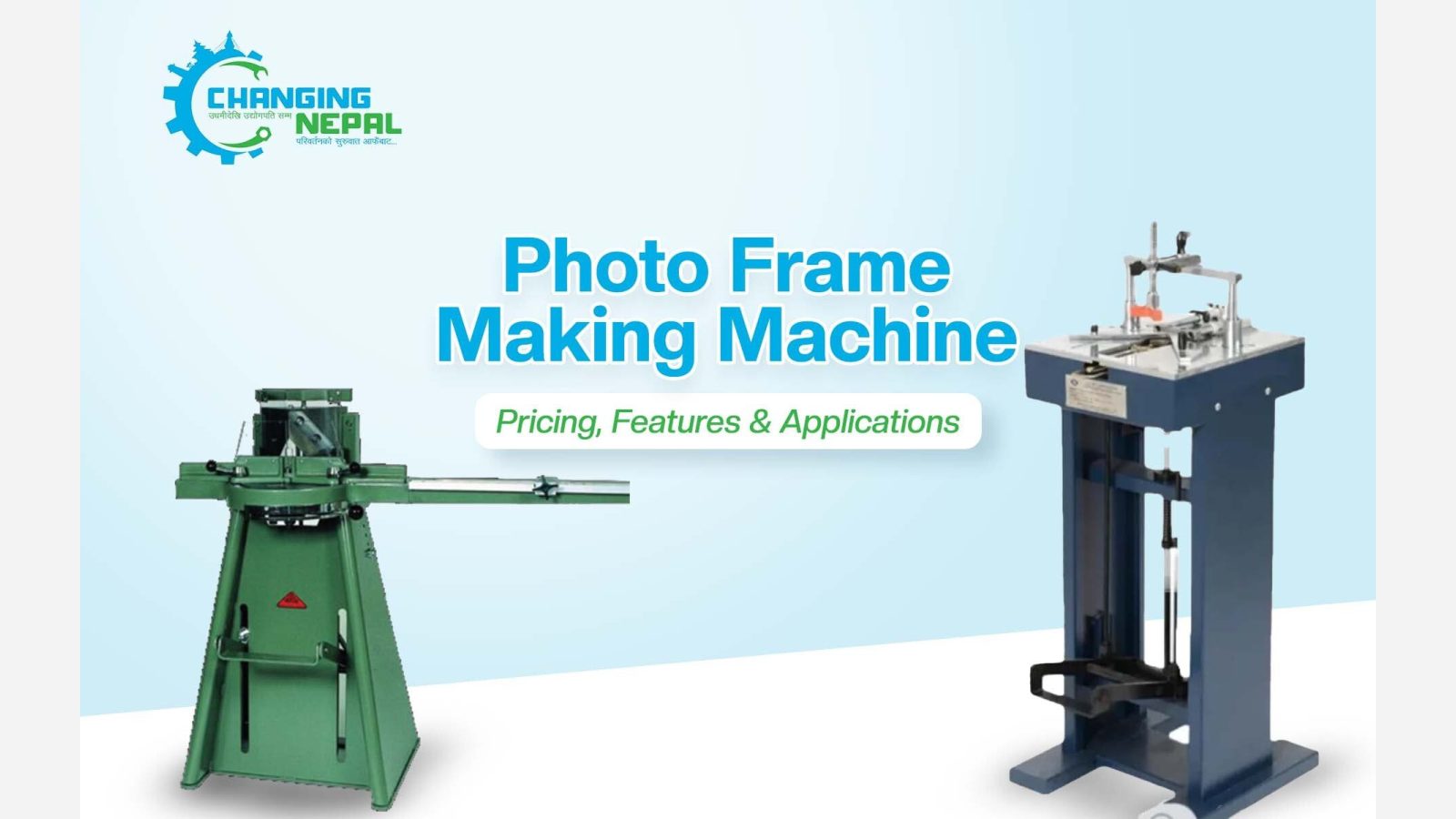
Photo frame manufacturing machines are an important element in photo frame manufacturing, which in turn is utilized for use at home, offices, galleries, and business establishments. They can cut, shape, and build frames using wood, metals, PS plastic, MDF, and acrylic materials. The machines increase the production's efficiency, accuracy, and customization, decreasing labor intensity. In this highly informative blog, we will discuss the price, the features, and the applications of photo frame making machines in such a manner that the buyers and users would comprehend their significance and select the correct solution.
What Is a Photo Frame Making Machine?
A photo frame machine is a manufacturing equipment that is used entirely to mechanize the cutting, shaping, assembling, and sometimes decoration of a picture frame. Depending on the material of the picture frame, these machines vary in construction and operation, ranging from completely manual to semi-automatic and fully automatic systems.
A photo frame production machine is an industrial or workshop-quality machine that can automate most of the processes in photo frame production. They might include:
- Cutting and Mitering: Constructing accurate 45-degree angles in a bid to retain the frames' corners
- Pinning and Assembling: Holding components together firmly with minimal gap between them
- Moulding Shapers: Forming aesthetic edges and profiles
- Multi-material Compatibility: Can process different materials like wood, PVC, metal, or composites.
The majority of Nepali workshops employ a combination of manual, half-automatic, and automatic machines based on production volume and investment capability.
Types of Photo Frame Making Machine
- Manual Frame Cutting Machines: Hand-cranked, most suitable for custom units or small businesses
- Semi-Automatic Machines: Mechanical or hydraulic driven, most appropriate for medium-sized manufacturers
- Fully Automatic Lines: PLC-driven machines employed by large players, high volume, and repetition
Pricing in Nepal
Price is determined by machine type, capacity, degree of automation, and brand name. Current prices show:
- Manual Frame Cutting Machine: NPR 50,000–80,000 for basic cutting and mitering machines
- Semi-Automatic Machine: NPR 130,000–180,000 for hydraulic or pneumatic pinning facility-enabled machines
- Photo Frame Making Machine (Full Setup): NPR 260,000–300,000 for high-end models with multi-function capability
|
Machine Type |
Estimated Price Range (NPR) |
Key Features |
Production Capacity (Frames/Day) |
|---|---|---|---|
|
Manual Frame Cutting Machine |
50,000 – 80,000 |
Basic cutting & mitering, manual operation, compact design |
10 - 50 |
|
130,000 – 180,000 |
Hydraulic/pneumatic pinning, improved cutting precision, semi-automatic feeding, and assembly |
100 - 500 |
|
|
Fully Automatic Frame Making Machine |
260,000 – 1,000,000+ |
PLC control, automatic feeding, multi-material compatibility, touchscreen HMI, safety guards, and low maintenance |
500 - 1,200+ |
This price-capacity-feature estimation guides the frame manufacturers of Nepal to choose suitable machines as well as budget, production capacity, and operation needs, from the micro artisanal to the large-scale industrial production.
Industrial production requires a high investment, and entry-level machines would be suitable for small-scale businesses. Imported automatic lines are over NPR 1,000,000, along with customs, VAT, and freight.
Key Features in Photo Frame Making Machines in Nepal
Nepal's new machinery offers functionality that addresses local workshop requirements and compatibility with materials available.
- Precision Cutting and Mitering: Tight, gapless corners are the keys to aesthetic and functional perfection
- Multi-Material Capability: Works compatibly with Nepali timbers like Gmelina Arborea, PVC, MDF, and composite frames
- Pinning & Underpinner Mechanism: Hydraulic/manual/pneumatic choice for framing joint assembly
- Moulding & Shaping Attachments: Ornamental profiles for high-end client orders
- Easy Operation: Lever controls or touchscreen HMI, which require short staff training time
- Safety Features: Guards, cut-off switches, and warning signals to provide workshop safety
- Durability: Insect-proof and rust-proof construction with resistance to Nepali conditions
- Flexible Capacity: Machines produce 50 to 1,200 frames a day, based on model
- Availability of Service and Spares: The provincial and Kathmandu-based workshops are very much dependent on the support of suppliers such as Changing Nepal.
Fully automatic machines have programmable settings, computer control, and quick changeover for customized orders. Machines for low-volume production and craftsman operations remain a manual setup.
How Photo Frame Making Machines Are Used in Nepal
1. Mass Production for Retail
Mass producers like Photo Pasal Pvt. Ltd. and Kathmandu wholesaler shops use high-speed machinery to make high quantities of frames consistently. They supply photo studios, gift shops, office stationery stores, and websites.
2. Handicraft Workshops and Customization
Frame houses and small studios in Nepal use semi-automatic or manual machines to make custom frames for certificates and awards, wedding photos, or paintings.
3. Event and Studio-Based Services
Nepalese professional portrait and wedding studios provide frame making as an add-on to the photography service; the studio frames on the spot for events and customers. Instant availability and availability in many different sizes are big sales drivers.
4. Institutional and Educational Framing
Colleges and schools require certificate and medal frames, conventionally bulk-ordered and depending on automatic machines with multi-component and high-speed assembly functions.
5. Home Décor and Industrial
Manufacturers also supply frames to interior designers, contractors, and retailers who require insect-resistant, durable, and decor-compatible frames for business centers and homes.
Advantages for Nepali Businesses
- Better Efficiency: Massive boost in frames per day production, saving labor costs
- Quality Consistency: Eliminates errors that come with human work, particularly with the capacity for automation
- Scaling: Companies can begin with low-cost manual machines and expand to semi/full automation with increasing demand
- Customization: Capacity to make frames in a shape, size, or finish your customers desire and like
- Support for Local Material Utilization Equipment and machinery designed for indigenous Nepali timbers ensures continued sustainable production
- Local Service Networks: Major suppliers like Changing Nepal provide installation, spares, and in-country support
What You Can Expect from Buying a Photo Frame Making Machine in Nepal
- Production Requirements: Identify whether you need high-volume automation production or customized artisanal production
- Material Emphasis: Alleviate preferred wood, metal, PVC, or composite with machine type
- Budget and ROI: Included the cost of the machine, upkeep, import duties, and long-term scalability
- Availability of Spare Parts and Service: The ability to have a local supplier to fall back on is priceless
- Skill Level and Staffing: Easy-to-use and safety-laid-out machines minimize training time for staff
- Workspace Requirements: Machine size about your workshop or studio space
- Future Development: Seek models that are upgradable and compatible to interface with CNC routers, shapers, and computer controls as your business grows.
Large Suppliers and Workshops in Nepal
i) Photo Pasal Pvt. Ltd.: Kathmandu-based, govt. registered, dealing in all customized and standard frames
ii) Machine In Nepal and Change in Nepal Pvt. Ltd.: both manual and semi/fully automatic frame-making machine suppliers and manufacturers with full after-sales service.
iii) HamroBazaar, Websites Online: More and more businesses employ online sites to buy machines, compare models, and utilize warranty services
Local setup, troubleshooting, and upgrades can be facilitated, a huge boon to new frame businesses throughout Nepal.
Conclusion
The increasing need for photo frames in Nepal, in houses, offices, schools, or for events, offers a great opportunity to invest in the manufacturing machine for photo frames. The basic beginner sets are available from NPR 50,000, and full industrial sets begin from NPR 300,000, from which local businesses can select one according to their size, budget, and creativity objectives.
Core competencies like precision mitering, compatibility with various materials, simplicity of operation, and capacity for scalability guarantee that such machines provide profitability and quality. Local after-sales services and compatibility of local timbers with customer specifications further differentiate Nepal's frame-making industry.
For Nepali companies, the appropriate machine is a gateway to growth, customer fulfillment, and innovative business expansion. Ready to launch or grow your photo frame business? Consult with Changing Nepal, validate your market demand, and invest in the technology that will help bring your creative vision to life.
Frequently Asked Questions (FAQs)
Q1: What is the price of a photo frame-making machine in Nepal, approximately?
Depending upon the category and degree of automation, the manual cutting machines can be purchased at NPR 50,000, semi-automatic at NPR 130,000 to NPR 180,000, and the fully automatic frame making machines with high-end features for NPR 260,000 to NPR 300,000 or even more, depending upon specifications and custom duty.
Q2: What type of material is worked with by the photo frame-making machines in Nepal?
Most of the machines are suitable for a variety of materials easily found in Nepal, such as local timbers like Gmelina Arborea, MDF, PVC plastics, metal, and composite material. Your machine choice depends on your primary material and your production needs.
Q3: How do I choose between manual, semi-automatic, and full automatic photo frame production machines?
Manual or semi-automatic machines are economical in the case of medium to low volume or craft production. In commercial production with high volume, where production is rapid and quality is repetitive, automatic machines are best suited. Technical expertise available, budget, and scale of production need to be taken into account while making the decision.