
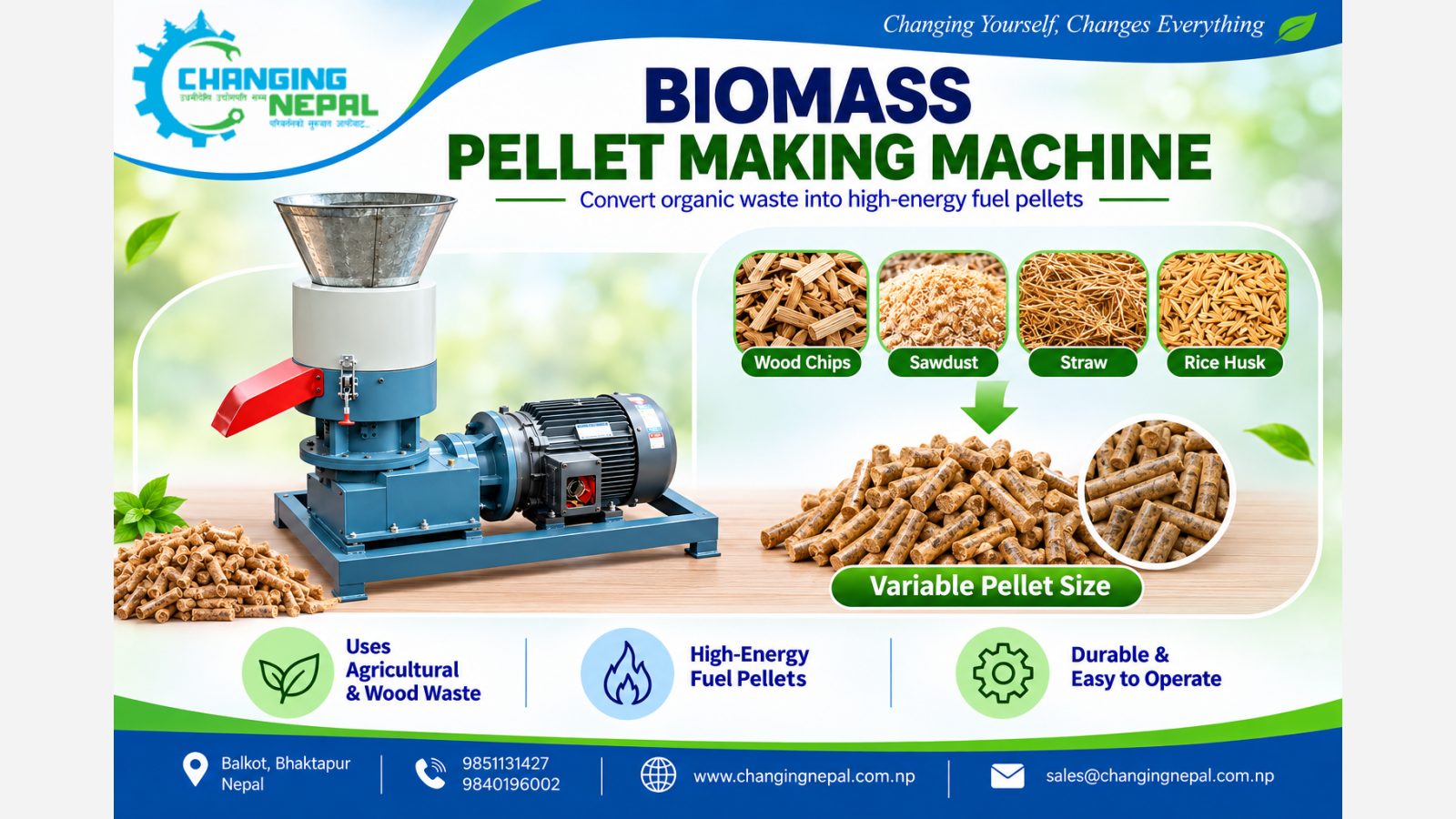
Biomass pellets are small, compact bullets made of otherwise useless residue such as sawdust, wood flakes and rice husk. They can be used as fuel or even animal feed, turning waste to best. The biomass pellet making machine, used for making biomass pellets, can be purchased in Nepal through Changing Nepal.
Biomass pellet making in Nepal is a promising opportunity for converting agricultural and wood waste into useful solid fuel. Traditionally, wood chips, sawdust and agricultural waste are thrown out or burnt directly. Loose biomass is difficult to transport, store and feed into machinery. A modern biomass pellet making machine compresses materials such as sawdust, wood chips, straw, rice husks, bamboo and peanut shells into dense fuel pellets. These pellets can be used as a fuel source in compatible biomass heating systems, boilers and other industrial applications.
With increasing fuel prices, starting a biomass pellet making business in Nepal offers a promising opportunity to profit off of locally available waste materials. However, business viability depends on raw material availability, electricity costs, machine capacity and demand for finished pellets. This article discusses about the biomass pellet manufacturing process and available machinery.
Section Links
Biomass Pellet Making Process
The biomass pellet production process converts loose agricultural and wood residues into compact fuel pellets.
- Raw Material Collection: Collect suitable biomass materials such as sawdust, wood chips, straw, rice husks and other agricultural residues. Filter out unwanted materials such as stones and metal pieces to prevent damage on the machinery.
- Size Reduction: Large pieces of wood, straw and other materials may need to be chopped or crushed into smaller particles.
- Pellet Formation: Feed the prepared biomass into the pellet making machine. Mechanical pressure and frictional heat compress the material through a die, forming dense cylindrical pellets. Some materials may require chemical binders to form the shape of pellets.
- Pellet Cutting and Collection: The compressed biomass exits the die as pellets, which are cut or broken into suitable lengths and collected.
- Cooling and Finishing: Allow freshly produced pellets to cool and stabilize.
- Packaging and Storage: Store finished biomass pellets in a dry location to protect them from moisture.
Biomass Pellet Making Machines Available in Nepal
Biomass Pellet Making Machine
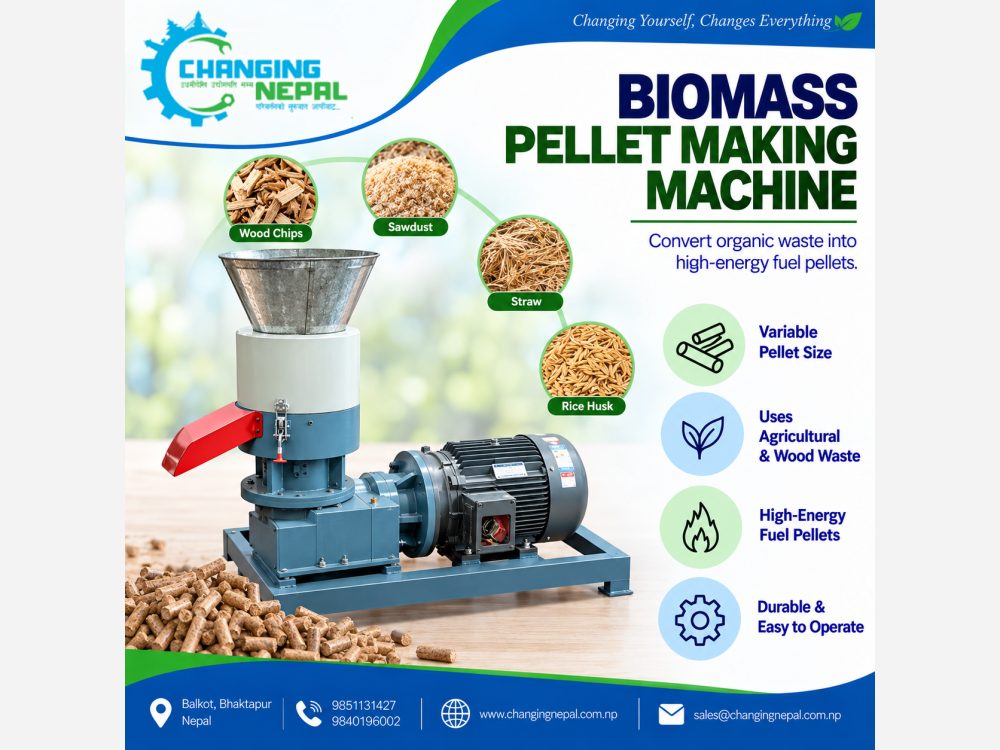
The Biomass Pellet Making Machine converts prepared organic waste materials into compact fuel pellets. It can process suitable agricultural and wood residues, including sawdust, wood chips, straw and rice husks, after appropriate preparation.
It works on three phase power supply and can output pellets of 4 - 15 mm. It is suitable for entrepreneurs, agricultural processing businesses, sawmills and wood-related industries looking to produce biomass fuel from available waste materials. Pellets are easier to store, transport and can yield higher energy efficiency than loose biomass.
Key Features:
- Variable Pellet Size: Supports different pellet sizes from 4 - 15 mm according to the machine's compatible die configuration.
- Agricultural and Wood Waste Processing: Designed for suitable biomass materials, including sawdust, wood chips, straw and rice husks.
- High-Energy Fuel Pellets: Converts suitable biomass into dense pellets that can be used as fuel in compatible equipment.
- Durable Construction: Designed for mechanical processing of biomass materials.
- Easy to Operate: Offers a mechanized approach to pellet production after appropriate material preparation and operator training.
- Affordable Price: The price of a biomass pellet making machine in Nepal rounds to around 6 lakhs.
Frequently Asked Questions
1. What is a biomass pellet making machine?
A biomass pellet making machine is a device that compresses prepared agricultural and wood residues into dense fuel pellets. It is also called a biomass pellet mill or biomass pelletizer.
2. How are biomass pellets made from agricultural waste?
Biomass pellets are made by collecting, cleaning, sizing and conditioning raw materials before feeding them into a pellet machine. The material is compressed through a die, after which the pellets are cooled and stored. See the biomass pellet making process for more details.
3. What is the price of a biomass pellet making machine in Nepal?
The price of a biomass pellet machine in Nepal depends on its capacity, motor power, configuration and other technical features. The tentative price is around NPR 6 lakhs.
4. What raw materials can be used for biomass pellet making?
Common raw materials include sawdust, wood chips, rice husks, straw, bamboo and other suitable agricultural residues. Raw materials may require drying, crushing or other preparation before pellet production, and compatibility should be confirmed for the selected machine.
5. Is biomass pellet making a profitable business in Nepal?
Biomass pellet making can be a business opportunity in Nepal where suitable raw materials are available at a reasonable cost and there is demand for fuel pellets. Profitability depends on equipment investment, electricity, labour, material preparation, transportation and selling price.
6. Is a biomass pellet machine better than using agricultural waste directly as fuel?
Pelletizing can make biomass more compact, easier to handle and more consistent for use in compatible fuel-burning systems. However, the benefits depend on the raw material, processing costs and intended fuel application.
7. How much space and manpower are required for a biomass pellet making business?
Space and manpower requirements depend on the machine size, production capacity and additional equipment used for crushing, drying, cooling and packaging. A suitable working area should provide adequate ventilation, safe machine access and separate storage for raw materials and finished pellets.
8. Can rice husks and sawdust be converted into fuel pellets?
Yes, rice husks and sawdust can be used to manufacture biomass fuel pellets with suitable equipment and preparation. Their different physical properties may require adjustments to moisture, particle size and machine settings.
9. Do biomass pellets require chemical additives?
Many biomass materials can form pellets without chemical additives because natural binding components help hold the compressed material together. However, the need for binders or conditioning depends on the raw material and pellet quality requirements.
10. Where can I buy a biomass pellet making machine in Nepal?
You can inquire about the Biomass Pellet Making Machine through Changing Nepal Machinery Company, located in Balkot, Bhaktapur, Nepal. Contact us for machine availability, specifications and pricing.