
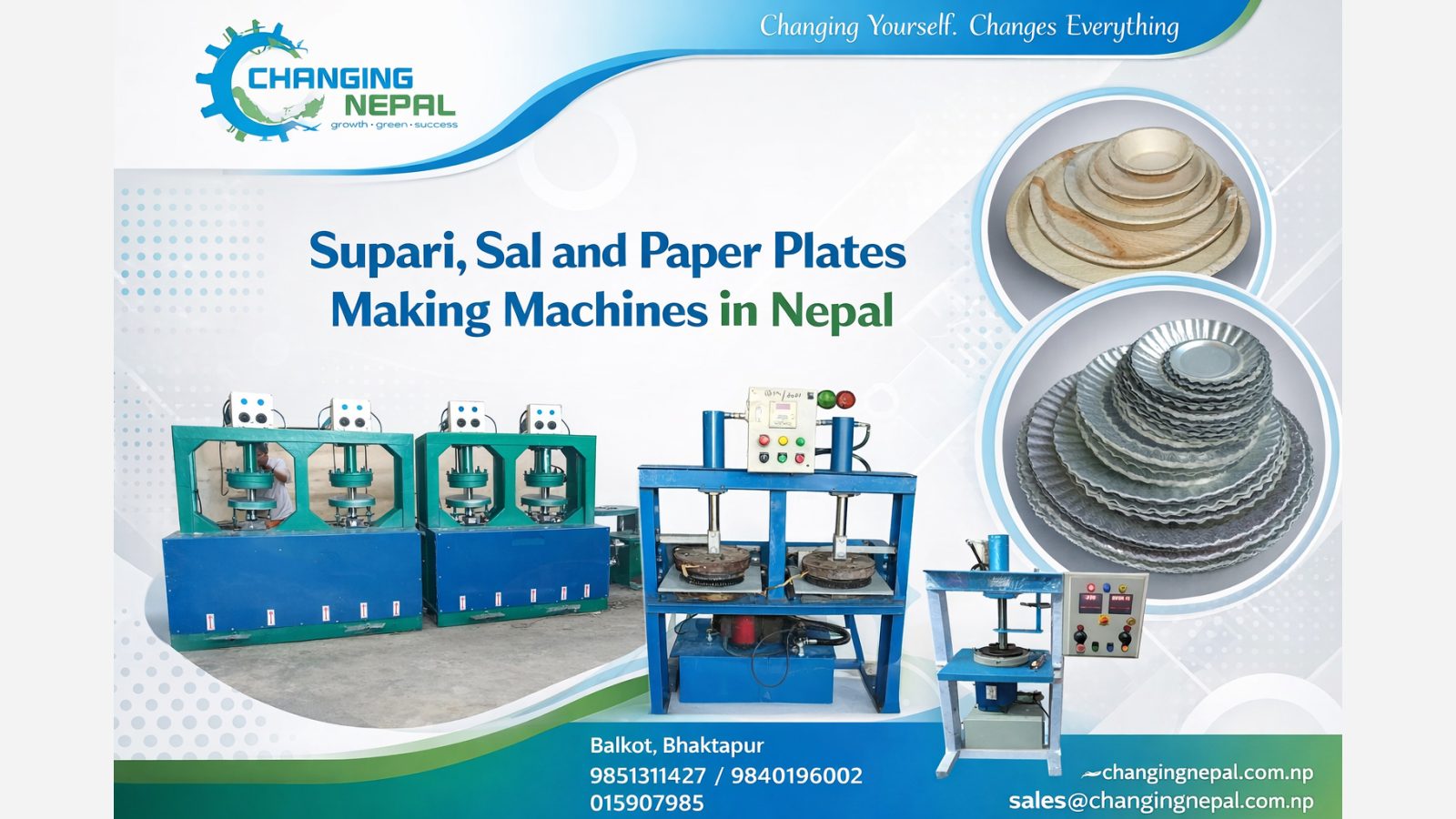
From weddings to roadside tea stalls, plastic plates have been convenient replacements of reusable metal and ceramic plates. Their affordability and use-and-throw nature have made them extremely popular amongst street vendors and event organizers. However, this has led to a growing plastic waste crisis. From urban streets of Kathmandu to rural municipalities and even high mountains, single use plastic products can be seen floating in rivers, filling landfills and piling up on roadsides.
Plastic is incredibly durable. It can take from 450 to 1000 years to degrade. Instead of fully degrading, they break down into microplastics and enter the ecosystem, causing severe long-term damage to wildlife and even human health. Plastic waste management is a great challenge, especially in developing countries where waste segregation, recycling and disposal systems are not fully established. As a countermeasure, the government of Nepal has imposed bans on some single-use plastic products like thin plastic bags.
Amidst plastic bans and increasing health and environmental concerns, the demand for an alternative is rapidly increasing across Nepal. Businesses that once relied on plastic disposable plates are now seeking biodegradable options that comply with regulations while maintaining affordability and convenience. This transition presents a powerful business opportunity. Eco-friendly plate production using supari (areca) leaves, sal leaves, and biodegradable paper is emerging as a profitable and future-ready industry.
This article explores the process, scope and types of machines for plate i.e. dona, tapari and thal production from supari (areca) leaves, sal leaves and paper available in Nepal.
Section Links
Supari Leaf Plates (Dona, Tapari and Thaal)

Dona, Tapari and Thaal (plates) produced from fallen leaves of supari (areca) plant are emerging as one of the most premium and eco-friendly alternatives to plastic disposable plates in Nepal. They are durable, waterproof and degrade within 6-8 weeks, making them ideal for ceremonies and street vendors.
Raw Materials
- Naturally fallen supari (areca) palm leaves
- Clean water for washing
- Drying space (sun drying or shed drying)
No trees are cut during production. Only fallen leaves are collected.
Production Process
The process is simple, less labor-intensive and scalable.
- Collection of fallen supari leaves
- Washing to remove dust and debris
- Drying to remove excess moisture
- Placing the leaf into the heated die mold
- Hydraulic heat pressing for shaping
- Edge trimming and finishing
- Quality inspection and packaging
Proper temperature and pressure settings are critical to prevent cracking and ensure uniform shaping.
Available Machines
-
Automatic Areca Leaf Plate 3 Die Hydraulic Machine
This hydraulic heat press machine is designed for efficient production of supari (areca) leaf plates including dona, tapari and thaal. It features three die stations for continuous production and uniform shaping.
Specification Details Machine Type Hydraulic Heat Press (3 Die) Motor Power 2 HP Voltage 220V / 380V Die Sizes Included Round Dies: 8, 10, 12 inch Production Capacity Approx. 1500–2500 plates/hr Price (Nepal) NPR 3,50,000 -
Automatic Areca Leaf Plate 6 Die Hydraulic Machine
This heavy-duty hydraulic heat press model is suitable for medium to large-scale production. With six die stations, it increases output capacity while maintaining consistent pressure and heat distribution.
Specification Details Machine Type Hydraulic Heat Press (6 Die) Motor Power 2 HP Voltage 220V / 380V Die Sizes Included Round Dies: 4, 5, 6, 8, 10, 12 inch Production Capacity Approx. 2500–4000 plates/hr Price (Nepal) NPR 6,00,000
Product link:
Paper Plates
Paper plates made from sustainably sourced paper pulp are emerging as a practical and eco-friendly alternative to plastic disposable plates in Nepal. They are lightweight, hygienic, and suitable for a wide range of uses, from household gatherings to street food vendors. Paper plates are biodegradable and typically decompose within a few weeks under natural conditions, if not laminated.
Raw Materials
Paper plates require a minimal set of raw materials and they can all be bought in Nepal.
- Food grade paper rolls
- PE-coated paper (for water resistance, optional)
- Packaging materials
Available Machines
-
Crank / Manual Pillar Model (Paper Plate / Dona / Thali)

Suitable for Dona and Thali production. Commonly used for Panipuri plates, Momo plates, Chaat plates and small snack serving plates. Normal and Butte (wrinkled) plates can be produced by changing the die mold. Wrinkle formation depends on the die and manual pressing — it is not automatic.
Model Plate Size Support Rate (NPR) 2 Pillar Up to 9 inch 37,000 3 Pillar Up to 10 inch 47,000 4 Pillar Up to 12 inch 60,000 5 Pillar Up to 13 inch 73,000 6 Pillar Up to 15 inch 89,000 -
Hydraulic Models (Paper Dona / Thali)
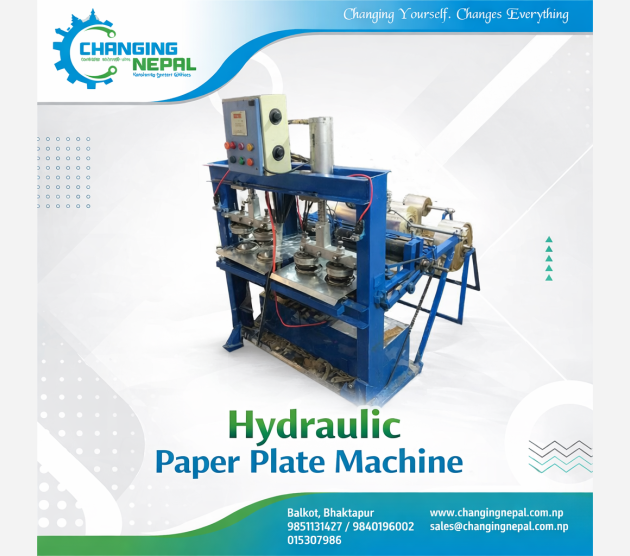
Hydraulic machines provide better finishing and pressure for Dona and Thali. Ideal for higher volume production of Panipuri plates, Momo plates, Chaat plates and catering plates. Thali patterns such as Butte or Diamond depend on the selected die mold. They can also make plates out of sal leaves.
Hydraulic Type Basic Model Auto Model Single Cylinder NPR 1,80,000 NPR 2,10,000 Double Cylinder NPR 2,30,000 NPR 2,60,000 -
Fully Automatic Wrinkle Plate Making Machine
Designed for high-volume wrinkle plate production. This system forms wrinkles automatically during continuous operation.
Model Output Type Rate (NPR) Standard Automatic Wrinkle Continuous wrinkle production 2,50,000 – 2,70,000 Heavy-Duty Automatic Wrinkle Higher capacity wrinkle line 3,40,000 – 4,00,000
Product links:
Sal Leaf Plates
Sal Leaf plates have been used traditionally in religious cultural ceremonies across Nepal. They are entirely sustainable and bio degradable. For manual production, sal leaves are stitched to shape with thin bamboo pieces. Due to its cultural value and eco friendliness, sal leaf plate production can be turned into a profitable business with commercial machinery.
Raw Materials
- Fresh or semi-dried sal leaves
- Stitching material (thin bamboo sticks or food-safe wire)
- Clean water (if washing required)
Leaves are stitched together to form a sheet before pressing. No chemical processing is required.
Available Machines
Sal leaf plate production can be done with the Hydraulic Machines as listed in the paper plates section above. No specific machinery is required. The only requirement is stitching sal leaves with either bamboo or food-safe fibers before pressing.
Scroll up or Click Here for Machine Specifications and Price.
Comparison Table
| Specification | Supari Leaf Plates | Paper Plates | Sal Leaf Plates |
|---|---|---|---|
| Raw Material | Fallen Areca (Supari) Leaves | Food-Grade Paper Rolls | Stitched Sal Leaves |
| Biodegradability | Fully biodegradable (6–8 weeks) | Biodegradable (if non-laminated) | Fully biodegradable (natural decomposition) |
| Machine Type Required | Hydraulic Heat Press Machines | Crank Models / Hydraulic Models / Fully Automatic Machines | Hydraulic Heat Press Machines |
| Machine Price Range (Nepal) | NPR 3,50,000 – 6,00,000 | NPR 37,000 – 4,00,000 | NPR 1,80,000 – 2,60,000 |
All these machines are available at Changing Nepal. For any inquiry about specific products or purchase information, please contact us.
Why Buy Machines from Changing Nepal?
- Genuine imported machines
- Spare parts availability
- Technical support
- Installation guidance
- Delivery across Nepal
- Warranty support
Frequently Asked Questions (FAQ)
-
What is the cost of plate making machines in Nepal?
The cost of disposable plate making machines varies with the type of raw materials and production rate. The price range is listed as follows:
- Paper Plate (Manual): Starting from NPR 37,000
- Paper Plate (Hydraulic): NPR 1,80,000+
- Supari Leaf Machine: NPR 3,50,000+
- Sal Leaf Production: Uses Hydraulic Models (NPR 1,80,000+)
-
Can sal leaf plates be produced commercially?
Yes. Sal leaf plates can be produced commercially using hydraulic plate making machines. Leaves must be stitched into sheets before pressing. With proper die molds and pressure control, sal plate production is suitable for small to medium-scale businesses.
-
Can paper plate machines produce both paper and leaf plates?
Crank models are suitable only for paper plates. Hydraulic models can produce paper plates as well as sal leaf plates. Supari (areca) leaf plates require dedicated hydraulic heat press machines.
-
Can paper or leaf plate making business be started from home?
Yes. Paper plate production can be started from home using manual crank models with basic electricity and workspace. Hydraulic machines usually require a small commercial space due to weight, vibration, and workflow needs.
-
How much space is required to install a plate-making machine?
Manual paper plate machines require approximately 100–150 sq. ft. Hydraulic machines require around 200–300 sq. ft. depending on model size and raw material storage needs.
-
Which machine is best for Panipuri and Momo plates?
Crank models are ideal for low-volume Panipuri and Momo plate production. For higher daily demand and better finishing, hydraulic models are recommended.
-
How long do supari plates last after production?
Supari leaf plates have a shelf life of 6–12 months if stored in a dry environment. They remain durable and suitable for serving hot and semi-liquid food.
-
Do sal leaves need stitching before pressing?
Yes. Sal leaves must be stitched together using bamboo sticks or food-safe fibers to form a sheet before placing them into the hydraulic die for pressing.
-
Are paper, sal, or areca plates safe for hot food?
Yes. Supari and sal leaf plates are naturally heat-resistant and safe for hot food. Paper plates are also safe when made from food-grade material, especially if PE-coated.
-
Is plate manufacturing profitable in Nepal?
Yes. With increasing demand for biodegradable alternatives and growing restrictions on plastic, plate manufacturing offers strong profit potential, especially in catering, street food, and religious event markets.