
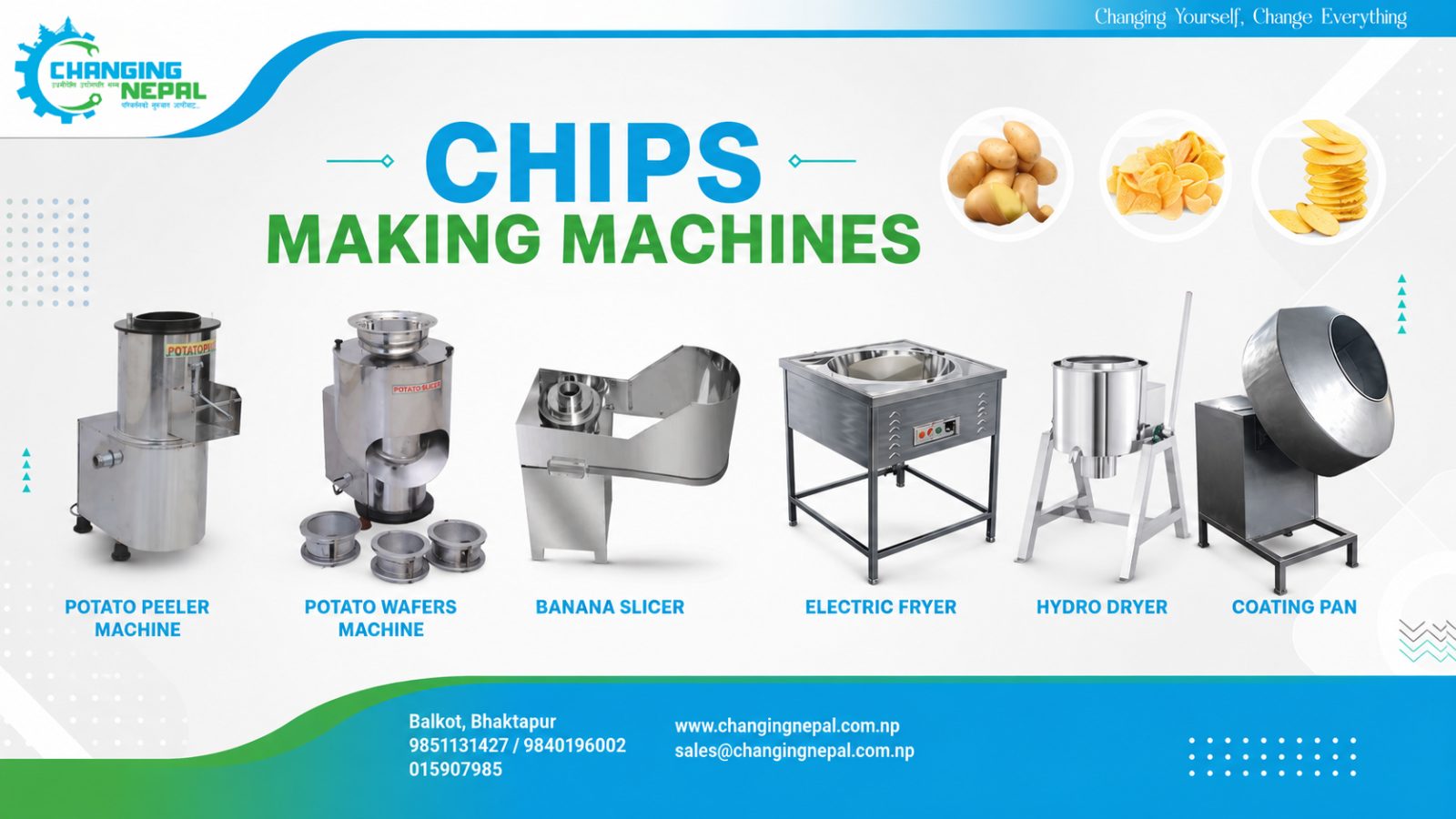
Nepal has a great market for locally made chips. Local, off-brand potato chips are in high demand owing to their unique Nepali seasoning. Packaged local chips are available in grocery stores, supermarkets, department stores, tea shops, schools, colleges, restaurants, and various retail outlets throughout the country. But most of them have the same transparent packaging and a small label with the brand name and the expiry date. Thus, there is great potential for entrepreneurs to capture that potent market and establish themselves as a trustworthy brand with a unique taste and packaging.
The Banana and Potato chips business is a relatively safe business due to the following reasons:
- High Consumer Demand
Chips are widely accepted snacks with year-round demand. Unlike seasonal products, chips can be marketed throughout the year. Once a brand is established, it is presented with elaborate business opportunities. - Availability of Raw Materials
Potatoes are omnipresent in any season and locally available. Bananas can also be sourced easily. This creates a strong foundation for local processing and value-added marketing. - Low Initial Investment
Chips manufacturing is a highly scalable business. Entrepreneurs can start small with a small production setup and scale up as the brand grows. Additionally, the labour and skill requirements are minimal. - Growing Preference for Products Made in Nepal
A local production can brand itself as Made in Nepal to gain an edge against foreign brands. This not only generates income but also helps reduce imports and the trade deficit.
Section Links
Manufacturing Process
Chips manufacturing is a straightforward process comprising of 7 stages as follows:
1. Raw Material Selection
The process of chips production commences with the selection of fresh potatoes or bananas. This is the most important step because only the right variety of potato and banana provides the right taste, texture, and overall product quality.
2. Peeling
The outer skin of the potatoes and bananas needs to be removed before further processing. They must be peeled to just the right depth to avoid part of the outer skin in the final product while minimizing flesh loss.
3. Slicing
The peeled potatoes or bananas are sliced into thin pieces. Depending on market demand and product type, slices can be produced in different styles, including plain, zigzag, and french-fry cuts.
4. Drying and Moisture Removal
After slicing, surface moisture is removed from the slices. This step helps improve frying efficiency, reduce oil absorption, and enhance the final texture of the product. While sun drying or air drying is possible, it is not plausible for commercial production and an industrial moisture remover is highly recommended.
5. Frying
The prepared slices are fried under controlled conditions until they achieve the desired crispness, colour, and texture. The type and temperature of the oil need to be chosen carefully.
6. Oil Drying, Flavour Coating and Seasoning
Once fried, excess oil is dried off of the chips so that they can be coated with salt, pepper and other seasonings. A unique blend of local spices can help in brand establishment.
7. Packaging
The finished chips are packed in suitable packaging materials to maintain freshness, improve shelf appeal, and facilitate distribution to retailers and consumers.
Machines for Chips Production
For commercial production of chips, the primary machines required are peeler, slicer, dryer, fryer, coating pan and packager.
Potato Peeler Machine
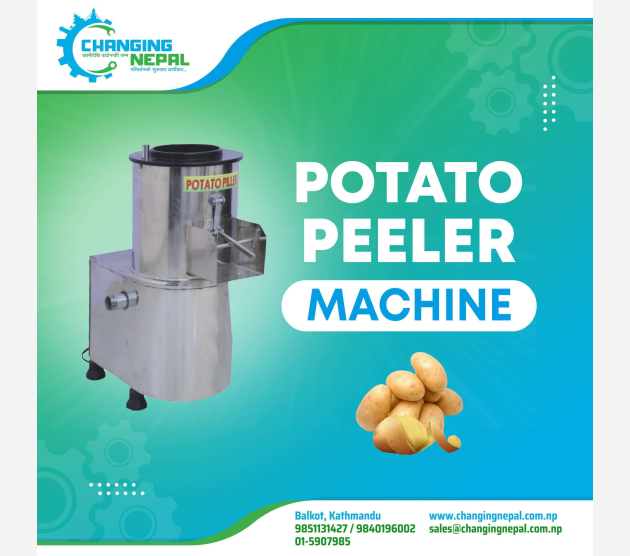
The Potato Peeler Machine is designed to quickly remove the outer skin of potatoes before slicing and processing. It helps reduce manual labor, improve productivity, and maintain consistent peeling quality for potato chips manufacturing.
| Specification | Details |
|---|---|
| Available Capacities | 5 kg – 50 kg |
| Application | Potato Peeling |
| Price Range (Nepal) | NPR 49,000 – 115,000 |
View Potato Peeler Machine Details
Potato Slicer Machine
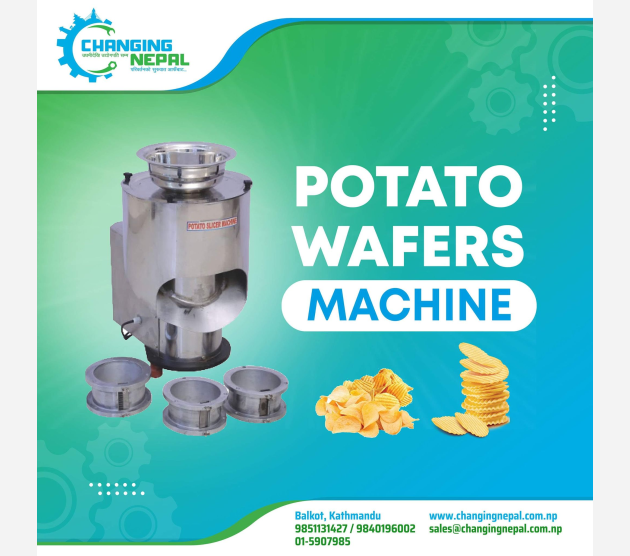
The Potato Slicer Machine produces uniform potato slices for chips production. It supports different cutting styles, helping manufacturers create a variety of potato chip products.
| Specification | Details |
|---|---|
| Cutting Styles | Plain, Zigzag, French Fry |
| Application | Potato Chips Production |
| Price (Nepal) | Starting from NPR 66,000 |
View Potato Slicer Machine Details
Banana Slicer Machine
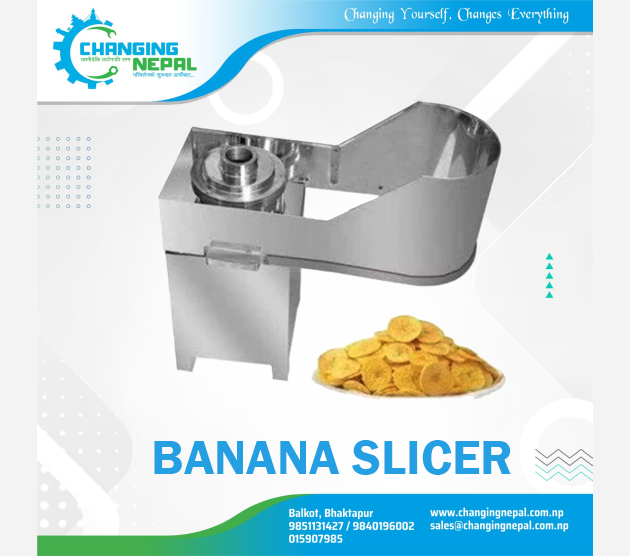
The Banana Slicer Machine produces uniform banana slices that help achieve consistent frying results and product quality.
| Specification | Details |
|---|---|
| Available Models | Regular, Speed Controller Type |
| Application | Banana Chips Production |
| Price Range (Nepal) | NPR 64,000 – 75,000 |
View Banana Slicer Machine Details
Dryer Machine
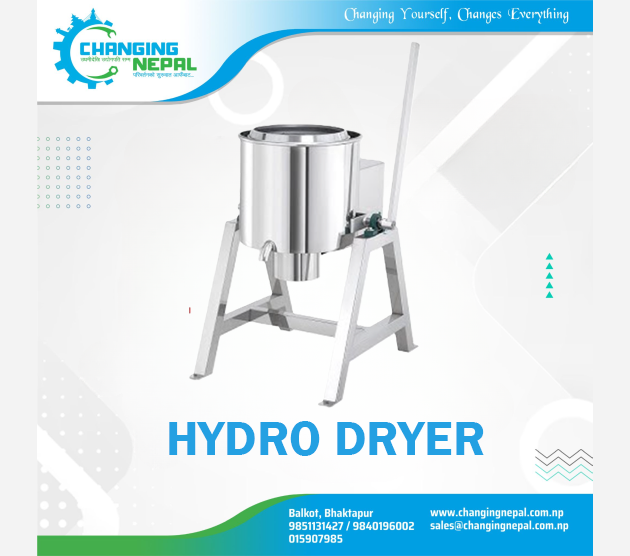
The Dryer Machine removes excess moisture from freshly sliced potatoes and bananas before frying, helping improve texture and frying efficiency.
| Specification | Details |
|---|---|
| Available Capacities | Small to 30 kg |
| Application | Moisture Removal |
| Price Range (Nepal) | NPR 65,000 – 89,000 |
Chips Fryer Machine
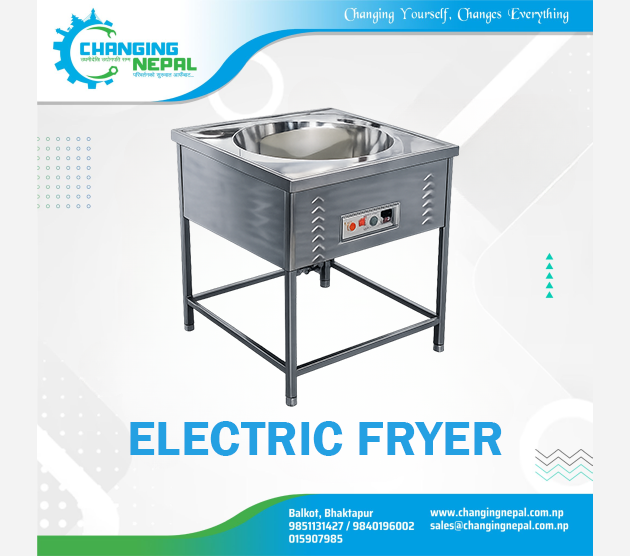
The Chips Fryer Machine is used to fry potato and banana slices to achieve the desired crispness, texture, and color. Multiple capacity options are available for different production scales.
| Specification | Details |
|---|---|
| Available Capacities | 6 L – 150 L |
| Frying Time | Approx. 3–6 Minutes per Batch |
| Price Range (Nepal) | NPR 60,000 – 390,000 |
View Chips Fryer Machine Details
Coating Pan Machine
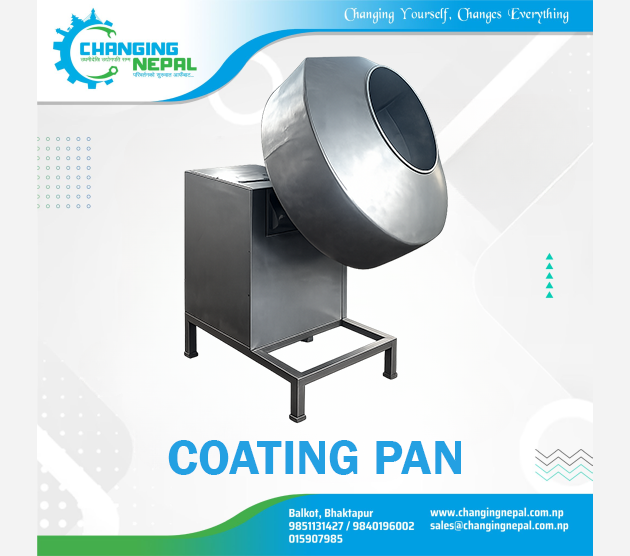
The Coating Pan Machine is used to apply salt, masala, and other seasonings evenly to fried chips, ensuring consistent flavor distribution.
| Specification | Details |
|---|---|
| Available Models | Regular and Tilting Types |
| Application | Seasoning and Flavor Coating |
| Price Range (Nepal) | NPR 81,000 – 170,000 |
View Coating Pan Machine Details
Packaging Machine
Packaging machines help seal and package finished chips products, improving shelf life, product presentation, and brand value.
For information on packaging machines, visit the link below:
View Packaging Machine Details
Frequently Asked Questions
Which chips making machines are suitable for small-scale businesses?
Small-scale entrepreneurs can start with lower-capacity equipment such as a 5–10 kg Potato Peeler Machine, a Potato Slicer Machine or Banana Slicer Machine, a small Dryer Machine, and a 6–10 liter Chips Fryer Machine. This setup is ideal for startups, home-based production units, and local snack businesses looking to enter the market with a manageable investment.
Which chips making machines are suitable for medium-scale production?
Businesses experiencing steady demand can benefit from medium-capacity machines such as 15–25 kg Potato Peeler Machines, tilting Dryer Machines, 15–25 liter Chips Fryers, and larger Coating Pan Machines. These machines help improve productivity while maintaining consistent product quality.
Which chips making machines are best for large-scale commercial production?
Large-scale manufacturers typically prefer industrial-capacity equipment, including 50 kg Potato Peeler Machines, large-capacity Dryer Machines, 50–150 liter Tilting Fryers, and automated Packaging Machines. Such setups are designed for businesses supplying wholesalers, supermarkets, and large retail networks.
Can the same production line manufacture both potato chips and banana chips?
Yes. A chips production line can be configured to manufacture both potato chips and banana chips. While separate slicing machines are typically used for potatoes and bananas, the drying, frying, seasoning, and packaging stages can be incorporated into the same production workflow.
Can different styles of potato chips be produced?
Yes. The Potato Slicer Machine can produce different cutting styles, including plain wafer slices, zigzag wafer slices, and french-fry cuts. This allows manufacturers to diversify their product range and cater to different customer preferences.
What is the approximate investment required for a chips production setup?
The total investment depends on machine capacities, production requirements, and the level of automation selected. Basic production setups can start with smaller-capacity machines, while larger commercial operations may require industrial fryers, larger coating pans, and automated packaging equipment. Businesses can choose machinery according to their budget and future expansion plans.
Can I upgrade my machinery as my business grows?
Yes. Many entrepreneurs begin with smaller-capacity machines and later upgrade to larger models as production demand increases. This allows businesses to scale gradually without requiring a large initial investment.
Why is a dryer machine important in chips production?
The Dryer Machine helps remove excess moisture from sliced potatoes and bananas before frying. Proper moisture removal contributes to better texture, improved frying performance, and more consistent product quality.
Why is a coating pan machine used in chips manufacturing?
The Coating Pan Machine ensures that salt, masala, and other seasonings are distributed evenly across the chips. Uniform seasoning helps improve taste consistency and enhances the overall quality of the finished product.
What packaging options are available for chips manufacturers?
Various packaging solutions are available depending on production scale and budget. Options range from basic sealing equipment to semi-automatic and fully automatic Packaging Machines, allowing businesses to package their products professionally and efficiently.
Do I need all the machines to start a chips manufacturing business?
Not necessarily. The ideal setup depends on production volume, product range, and business goals. Some entrepreneurs begin with a basic production line and add larger or more specialized machines as their business expands.
Is technical support available after purchasing the machines?
Yes. Installation assistance, machine setup guidance, operator training, and technical support are available to help businesses operate and maintain their equipment effectively.