
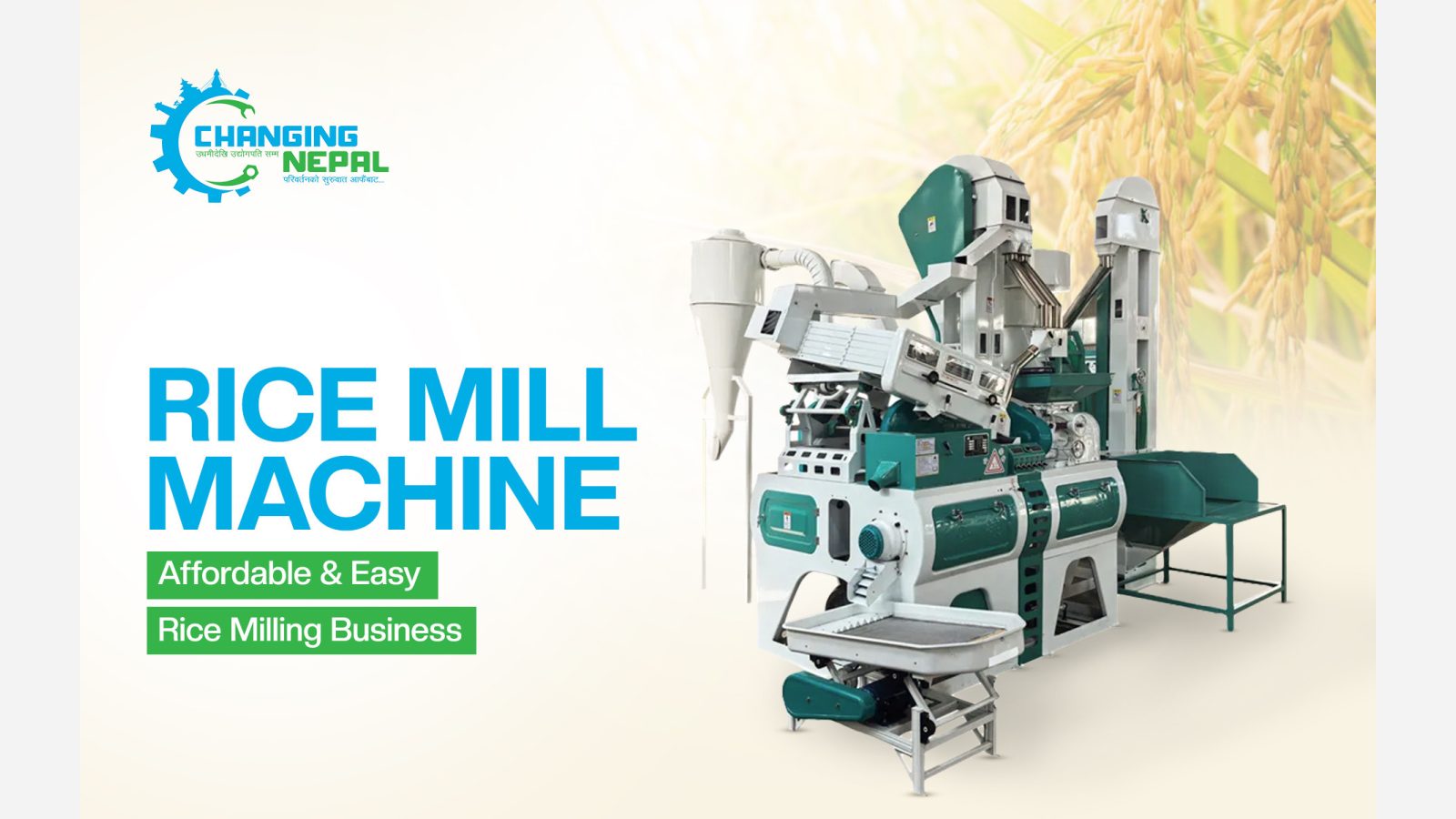
If you are planning to start a small business in Nepal and are looking for something cheap, practical, and in demand, a rice milling business may be the best option for you. Given that rice is a staple food item across Nepal, there is a consistent demand for clean and good-quality polished rice. One of the many advantages of starting your rice milling operation is that there are modern rice mill machines. There is no time like now to start your rice milling operation.
This comprehensive guide will cover everything you need to know about rice mill machines, including how they work, types of rice mill machines available in the Nepal market, price of rice mill machines, how to choose a rice milling machine, and how you can use it as a business.
What is a Rice Mill Machine?
A rice mill machine is an agricultural machine used to convert raw paddy rice into polished white rice. After harvesting, paddy rice is still completely covered with a rough husk and a bran layer, which has to be removed before the rice can be used for cooking or consuming. The rice mill machine can do this in a very efficient and quick manner.
Basic Steps Performed by a Rice Mill Machine:
- Cleaning – Removes dust, stones, and other foreign matter from the paddy.
- Dehusking – Removes the outer husk, or the outer layer of the paddy.
- Polishing – Removes the brown bran layer, so we have clean, white rice.
- Grading (optional) – Separates broken rice from whole rice.
In just one single machine, anyone can take raw rice and turn it into a market-ready product in literally minutes.
Why is the Rice Milling Business Perfect in Nepal?
Rice is grown abundantly in the Terai, hilly districts, and even some mountain areas in Nepal. Every year, thousands of farmers harvest paddy, and they all need a simple way to mill it! While some farmers can utilize their local mills, many farmers travel longer distances to mill their rice!
This presents a significant business opportunity for rural and small business entrepreneurs. A mini or commercial rice mill machine will fulfill local needs while providing you with regular income.
Advantages of Starting this Business in Nepal
- High local demand for milling services
- Low Startup cost
- Machines are available locally
- Easy to operate and maintain
- Government support for agro-based businesses.
Types of Rice Mill Machines in Nepal
Next, you can choose from the following types based on your budget and goal for business operation:
1. Mini Rice Mill Machine
- Input Capacity: 100-200 kgs/hr
- Power Required: 2.5 HP, 220 VOLT (single phase)
- Price: NPR 30000 - NPR 80000
- Ideal for: Farmers, small shops, home business entrepreneurs
- Characteristics: Portable, Easy to operate, runs on household electricity.
Example: Mini Rice Mill at Changing Nepal:
2. Commercial Rice Mill Machine
- Input Capacity: 300-800 kgs/hr
- Power Requirement: 5 HP - 7 HP, 380 Volt (three-phase)
- Price: NPR 100000 - NPR 250000
- Ideal for: Entrepreneurs in rural towns or urban markets
- Characteristics: Sturdy construction, continuous operation, high efficiency.
Example: Rice Mill 6N70 Pro Max at Changing Nepal
3. Combined or Automatic Rice Mill Plant
- Input Capacity: 1000 kgs/hr and above
- Power Requirement: 10 HP and above
- Price: NPR 850000 - NPR 2000000 +
- Ideal for: Large rice mill businesses, cooperatives, and commercial grain processors.
- Characteristics: Fully operational processing system - cleaning, dehusking, polishing, and grading.
Example: Combined Rice Mill at Changing Nepal
Where to Buy Rice Mill Machines in Nepal?
Here are a couple of options:
1. Changing Nepal
- Website: changingnepal.com.np
- Changing Nepal sells a range of machines from mini mills to commercial units.
2. Purwanchal Agro Enterprises
- Location: Itahari, Nepal
- They supply agro-machinery, including rice mills and accessories.
Make sure you ask about warranty, spare parts, and service before purchasing.
How to choose a rice mill machine?
As you choose a rice mill machine for your business, consider these points:
- Processing capacity: Consider the amount of paddy you will process every day. A mini mill can process a few hundred kilograms per day, whereas a commercial unit could process several tons.
- Power source: A mini mill can run on single-phase household power. The bigger units will need three-phase electricity or a diesel generator.
- Budget: If you're just starting in the business, consider starting small. You can always upgrade at a later date after you have developed your customer base.
- Space: Make sure you have enough space to install the machine, raw rice (paddy), and processed rice.
- Service & parts: Pick a brand that provides local servicing and part suppliers.
Cost Breakdown
|
Type |
Capacity |
Price (NPR) |
|---|---|---|
|
Mini Rice Mill |
100–200 kg/hour |
30,000 – 80,000 |
|
Commercial Machine |
300–800 kg/hour |
100,000 – 250,000 |
|
Combined Mill Plant |
1,000+ kg/hour |
850,000 – 2,000,000 |
Note: Prices can vary based on features and location.
Profit Potential: How Much Can You Earn?
Rice milling can provide healthy profit margins if operated properly.
Scenario:
- You charge: NPR 10–15 per kg for milling
- You process: 300 kg/day
- Your daily income: NPR 3,000 – 4,500
- Your income per month: NPR 90,000 – 135,000 (not including expenses)
Larger mills have greater profit potential by purchasing paddy, milling it, and selling the milled rice directly into the market.
Maintenance & Safety
- To ensure your machine operates optimally:
- Clean the machine every day after operating it
- Lubricate moving parts every week
- Store inside a dry environment
- Replace worn belts or blades on time
- Read and understand all safety instructions
- Proper care can extend the life of the machine and allow it to operate most efficiently.
Marketing: Advertise your rice milling service!
Here are a few simple ideas:
- Word of Mouth: Let your farmers or neighbors know about your service.
- Flyers and Posters: Print flyers and posters and distribute them at local markets or cooperatives.
- Social Media: Use Facebook or TikTok to publicly show how the machine operates (Mill and Demonstrate).
- Partnerships: Build relationships or establish partnerships with local cooperative members or grain buyers.
Bonus: Government Support in Nepal
We would be remiss if we didn't share the bottom lines that Nepal's government will often support agro-business with:
- Machinery subsidies
- Microfinancing loans
- Grant money for rural entrepreneurs
Contact your local agriculture office or the Prime Minister Agriculture Modernization Project (PMAMP) for information on current programs.
Conclusion
To recap, starting a rice milling business is a great way to earn income while helping your local agricultural community in a smart, sustainable way. With the availability of affordable rice mill machines, from mini shops to farmers, even individuals with very limited capital can start this business.
Even if you are starting a mini mill or looking to open up a full-size rice mill, there are market opportunities. You just need to ensure that you have the right machine, the right mindset, and a willingness to help serve your community.
And if you want to buy or import a rice mill machine, then you can feel free to contact Changing Nepal.